Posts

Behavioural economics: the Kylie Minogue of market research
Image
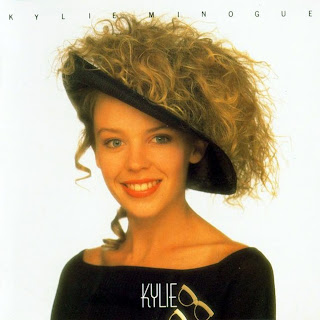
Do you remember those catchy tunes from the late 1980s? I Should Be So Lucky ?  The Locomotion ? The first time you heard them they were quite fun, memorable even. But then they got more airplay. And more. And more. Radio stations figured out that the sugary, bubbly popness of the tunes would cut through a lot of background noise and get your attention, so they played them again and again. Soon we had Got To Be Certain , and Je Ne Sais Pas Pourquoi , which were exactly the same as the first two songs. Then a "strategic inter-agency collaboration" with Jason Donovan on Especially For You . ( Jason looks a bit less lifelike in this alternative version) . After a short interlude in late 1989, another number 1 with Tears On My Pillow , which was meant to be more sophisticated but was equally artificial, overproduced and in fact just the same old song as I Should Be So Lucky . By this time anyone who wasn't a 13-year-old girl was thoroughly sick of Miss Minogue, who wasn...

Clearing my tabs for 2012

During 2011 I have probably spent about four days waiting for my browser to respond, due to the number of tabs I habitually keep open. Between the four computers I use, I probably have 200 blog posts in tabs waiting for me to comment. Here are a few of them (in no particular order), so my Chrome may enjoy a faster 2012. A note from Paul Krugman on what makes economics economics . Not a rhetorical discipline but one based on mathematical models. (However, see also Deirdre McCloskey's Knowledge and Persuasion in Economics , which puts forth a persuasive case that it is both. Also, I believe that rhetoric, culture and all forms of speech will one day themselves be modelled within economics - a tantalising prospect).   Talking of persuasion, here is Steve Randy Waldman on market monetarism , and whether we can fix recessions by simply persuading people to change their economic expectations, or whether there are real constraints that can't be solved just by monetary easing. I co...

What is "playing"?

In between work on some more serious posts (not to mention the day job), let me post a brief comment on Margaret Robertson's article on gamification, " Can't play, won't play ". It was written a year ago, so I'm not expecting to provoke an intense debate, but the same argument could easily be made today and it's worth responding to. In short, Margaret claims: gamification isn’t gamification at all. What we’re currently terming gamification is in fact the process of taking the thing that is least essential to games and representing it as the core of the experience. Points and badges have no closer a relationship to games than they do to websites and fitness apps and loyalty cards. Her preferred vision of games is: Games manage to produce [rich cognitive, emotional and social] drivers by being complex, responsive mechanisms. Games set their players goals and then make attaining those goals interestingly hard. My involvement and interest in games is much ...

A thought experiment: why the ECB should print money...

...and why the Bank of England and Fed are right to have done so already. I'm not talking about whether the European Central Bank should directly buy eurozone government bonds. This causes a moral hazard problem - it might encourage governments to be profligate and reduce incentives for structural reform. It's, at the very least, debatable. I'm talking about a more general question: why should central banks print money in a recession? This post won't have much new to say to macroeconomists, but it attempts to address a concern of many non-economists - won't printing money just cause more inflation? First, let's run a thought experiment. Imagine that your national government has decided that profligate use of fossil fuels is a problem. Probably because of the risk of climate change. Instead of using a carbon tax, the government decides to restrict the supply of oil coming into the country. It could allow more oil in if necessary - in fact it has a large res...

Does Nudge require regulators to be "more rational" than consumers?

A couple of times recently - notably in Bill Easterly's otherwise very positive review of Daniel Kahneman's new book - I've seen the following common critique of Nudge-style approaches: "But if people are irrational, regulators are irrational too - so how can they make rules to counter citizens' irrationality?" Easterly says: But [the case for libertarian paternalism] is much too sweeping, because it overlooks everything the rest of the book says about how the experts are as prone to cognitive biases as the rest of us. Those at the top will be overly confident in their ability to predict the system-wide effects of paternalistic policy-making... While it's right for regulators to be humble about their degree of knowledge about the world, and to be cautious in creating new regulations, there are several reasons why this particular criticism is wrong. First, we are not comparing like with like. There is no claim that a regulator, when placed in the same ...

Prompted Pareto improvements

I'm going to attempt to introduce a new concept here. It is a bit technical, but I'll try to provide background for non-economists first. I may indulge in some modelling to help me understand it better, so if that's not your thing, feel free to skip the equations and just read the words. I'm also struggling for the name of this concept. The title of the post, "Prompted Pareto improvements" is a name I'm reasonably happy with, but catchier suggestions are welcome. I'll start by explaining the idea of Pareto efficiency and a Pareto improvement. There's lots of information at the Wikipedia page if you'd like to know more. Pareto efficiency is one of the standards that is often used in economic theory as something we should aspire to, because it is a standard almost nobody can disagree with. It means that we should consider any transaction, or change in an economic allocation, to be a good thing if it makes at least one person better off an...

Please vote for us and help a charity

My company Inon, which applies behavioural economics to help our clients set the right pricing strategy, has been nominated for the Smarta 100 - the top innovative businesses in London. If we win, our £10,000 prize will be donated to charity - please leave a comment if you would like to nominate your preferred charity as one of the recipients. If you'd like to support us and your chosen charity, please click here and vote for us . You'll need to register but it only takes a few seconds. Thanks for your support - we have reached 20th in the rankings and it seems like we might have a chance if you can help spread the word.